Arboreal Tarantulas
Difficulty
Beginner
Size
7.5-15cm (3-6”)
Life Span
Up to 12 years
Diet
Insects
Temperament
Dependant on species
HOT Spot
Not Required
Temp
22-27⁰C (72-80⁰F)
Introduction
Buying any pet is a big decision but there are several things you may want to consider first to make sure that a Tarantula is the pet for you:
• Are all of the people in your household happy with a tarantula coming to live there?
• Can you guarantee that you will have a regular supply of live insects to feed to your tarantula?
• Are you happy to keep live insects in your home?
• Is Someone there to look after your pet when you go away?
• Are you prepared to look after an animal that could live up to and beyond 15 years?
Equipment Needed
Housing
Glass Terrarium or Plastic Faunarium
Heating
Heat mat
Lighting
Not Required
Substrate
Spider Substrate or Bioactive
Water
Water Dish
Types
There are many species of Arboreal Spiders which can be kept with ease. The best starter species by far is the pink toe (Avicularia sp).
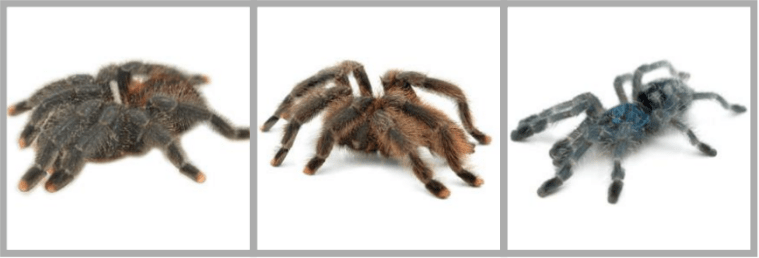
Buying Arboreal Tarantulas
- Check before buying:
- The Tarantula is feeding well
- Any reputable pet shop should be able to provide answers on how often the Tarantula is being fed and what type and size of live food it enjoys most.
- The Tarantula is healthy.
- 5 point animal health check:
- Make sure that the animal is alert and responsive.
- The legs should support the body effortlessly and be break free.
- The underside of the tarantula should be clean and free from splits or ruptures.
- The Tarantula should be a keen feeder.
- The tarantula should be free from any stuck moults.
Top tips
Housing
A relevant sized Glass Terrarium or Plastic Faunarium is the perfect housing solution for an Arboreal Tarantula throughout its whole life.
-
Glass Terrarium, Mini Tall, L30 x D30 x H45cm (12 x 12 x 18”)
-
Glass Terrarium, Small Wide, L45 x D45 x H45cm (18 x 18 x 18”)
-
Exo Terra Standard Faunarium, Large, L37 x D22 x H25cm (14.5 x 8.5 x 10”)
We recommend keeping spiderlings and small juvenile Tarantulas in smaller enclosures until they are well established.
Environment
Heating
Originating from a warm environment, Arboreal Tarantulas require a warm background temperature within their enclosure to help them to flourish.
A heat mat run on a thermostat is the ideal solution for providing heat. The heat mat should be located on the outside of the enclosure, either on the back or one of the sides.
The heat mat should be used in conjunction with a heat mat thermostat.
Heat mat thermostats are designed to regulate temperatures using a thermostat probe (also known as a sensor). Correct placement of the probe is critical to avoid overheating and injury to the Tarantula. Insert the probe through the lid of the terrarium and tape directly to the inside of the enclosure adjacent to the heat mat. The probe cable should be taped 2-5cm (1-2”) back from the actual probe sensor to allow for a correct temperature reading and to avoid it becoming dislodged.
Temperature and Monitoring
As a rough guide daytime and night time temperatures of between 22-27°C (72-80°F) should be provided. Make sure temperatures are checked regularly to ensure that there are no extreme fluctuations.
Lighting
A LED Light should be used with these tarantulas to give them to day and night cycle.They are a nocturnal species and should be provided with plenty of dark hiding areas to sleep away from the brightness of a LED Light.
Substrates and Decoration
Personal choice will dictate how you decorate your Glass Terrarium or Plastic Faunarium but we recommend the following as a guide:
-
Substrates: Tarantulas can be housed on Spider Substrate or a Bioactive Substrate. These substrates will retain essential moisture, helping to maintain humidity levels. Sphagnum Moss can also be used to keep humidity levels high, either place this on top of the substrate layer or mix it in with the substrate.
-
Wood for climbing and hiding in – Cork Branches, Tube and Pieces should be used to create vertical perching areas and hollows for the Tarantula to hide and rest in.
-
Artificial or live plants for decoration and to provide darker areas for the Tarantula to hide away in if it chooses to, live plants will also help to keep humidity levels up.
Diet and Water
Babies through to adults should be offered appropriately sized insects. A Tarantula uses its fangs to puncture its captured prey which renders it motionless. Digestive juices are then passed into the prey, which turns the insides to liquid, allowing the Tarantula to suck up the nutritious juices.
A source of fresh water should always be available for these Tarantulas. A piece of wet sponge or an insect gel can be used in a shallow dish to allow the Tarantula to hydrate itself. The Tarantula’s enclosure should be lightly misted every other day to ensure that the humidity is kept at around 75-85% but the substrate must not be allowed to become overly wet or boggy.
Supplementation
Arboreal Tarantulas do not need to receive additional supplementation to their diet.
Health & Hygiene
We recommend the following cleaning routine to keep your Tarantula healthy and happy:
Always wash your hands, surfaces and equipment with warm water and disinfectant immediately before and after handling your Tarantula, their enclosure and any other equipment.
Additional Information
Tarantulas are notoriously good at escaping. Ensure that the enclosure is fully secured as Tarantula hide and seek is not the best game to be playing!
The Arboreal Tarantulas covered in this guide can sometimes shoot out a white sticky substance from their rear ends when being handled. This is actually faeces and is a natural mechanism to make a predator think twice about eating them, giving the Tarantula a chance to retreat to safety.
FAQs
The Arboreal Tarantulas that have been covered in this guide are normally docile but they can also be jumpy and move quickly. Care must be taken when handling to ensure that your Tarantula cannot fall onto a hard surface as this could result in a life threatening injury.
A female Arboreal Tarantula may live for up to 12 years in captivity if cared for correctly. Male tarantulas normally reach 4-6 years old.
Arboreal is the word used to describe an animal which lives most or all of its life in trees.
Tarantulas can go for long periods without a drink but ensure a fresh water source is available so the tarantula can drink when it chooses to.
Every now and again a tarantula will moult its old skin.To do this the Tarantula will roll on to its back and climb out of its old skin by pushing the skin away from its body. Once the Tarantula has finished moulting it will turn back on to its legs.
Offer food twice a week to begin with, the Tarantula may require more or less than this as it grows. It is best to monitor how much the Tarantula is eating and adjust the feeding schedule accordingly.
Yes,Tarantulas are spiders; they belong to a group called arachnids which comprises of Scorpions and Tarantulas.
Mexican Red-Knee Tarantula.
Newsletter
For exclusive discounts, exclusive content and updates on our care guides
By subscribing to our newsletter you are agreeing to receive marketing emails from us. We do not share you data with 3rd parties as laid out in our privacy policy